Running a successful business is what it is about. Let's share lessons learnt and build even bigger, better businesses!
Reputation Specialist | Workshop Facilitator | Author
I was very grateful for the opportunity to chat to Benito Vergotine on Smile fm about Awesome AfriCAN.
I am very grateful and proud of my monthly Leadership Magazine Column. I found this month's one, "The man with the pink tie" rather cathartic, check it out on page 52 and 53.
MY BIGGEST LESSON THIS WEEK
Cheaters never win. I've just come back from the Hout Bay Parkrun, there was a couple just ahead of me that I caught up to and passed just before the path split into two. Low and behold miraculously they were ahead of me without passing me as I completed the loop. I pushed myself for various reasons and caught up with them again (due to their shorter path they were considerably further ahead of me), when I passed them and made a comment, I couldn't quite make out their snarky remark back at me, but I wasn't going to waste time to find out what they had to say, I had my own (full) run and time on my mind. The only people they are fooling are themselves.
MY FAVOURITE QUOTE THIS WEEK
There were two that I particularly liked:
“You will be the same person in five years as you are today except for the people you meet and the books you read.” ~ Charlie "Tremendous" Jones
"Call me old-fashioned, but I never visit a school in South Africa without wearing a jacket and tie. it is my way of signalling respect for teaching; for showing learners that they matter; and for helping build a culture in schools that respects the professionalism of the teacher," ~ Jonathan Jansen
WHAT MADE ME GIGGLE THIS WEEK
I think this housekeeper is meant for Mark and me!
What do you call the public transport mini-bus in Africa? Matatu? Taxi? Danfo? Blue Donkey? Here is a map showing what the public transport mini-bus is called in every African country! [source]
Congratulations to Sahle-Work Zewde as the country's first woman president. President Sahle-Work, 68, pledged to work toward a “society that rejects the oppression of women” and to strive for peace and unity. During her diplomatic career, she was head of the UN office to Kenya and acted as Ethiopia's ambassador to several countries including France, Djibouti and Senegal. [Source]
#Nigeria
Igbo-Ora is a town in Nigeria where you might think you are seeing double. The Oyo State town has one of the highest birth rates of twins in the world. [Source, BBC]
#SouthAfrica
Duduetsang Phele (34) is a professional figure skater that was born and raised in Mahikeng. She is the only black woman, at her age to ever qualify to represent a country in figure skating in the upcoming winter Olympics in 2022. She is also the only woman from Africa to ever qualify for the winter Olympics in the sports! Congratulations Duduetsang!
#SouthAfrica
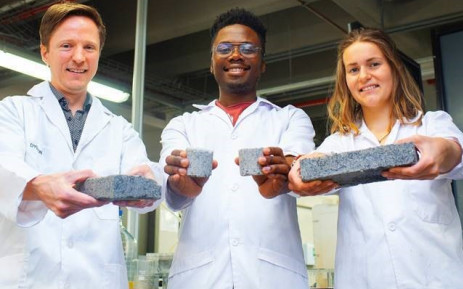
From left: Dr Dyllon Randall and his students, Vukheta Mukhari and Suzanne
PEE-NOMENAL! UCT Unveils the world's first brick grown from human urine.
The bio-brick was developed by UCT master’s student in civil engineering Suzanne Lambert. It is also good for the environment and global warming as it is made in moulds at room temperature. [via EWN]
Quote for the week:
"Young citizens of Africa need hope, prospects and opportunities. Its leaders need to speed up job creation to sustain progress and stave off deterioration," ~ Mo Ibrahim, Sudanese businessman and philanthropist
I am so incredibly proud of my amazing team and the wonderful work they are doing with internal climate surveys. Employees play a crucial role in an organisation's reputation. Chris Bischoff from our team wrote this fantastic article that was featured on Entrepreneurship Magazine's website. Here's a snippet: Employees play an important role in building the reputation of any organisation. Their sentiment towards the company is what they will be communicating to their nearest and dearest. This is important to consider as friends and family will have a perception of the company which is based on what employees say, rather than what a fancy advertising campaign might say. Reputation Matters, a proudly African research company specialising in reputation research, has developed its Organisational Climate Survey (OCS) research model to assess what exactly contributes to employee morale, productivity, employee motivation and behaviour, and job satisfaction. These are all crucial elements when it comes to an organisation’s reputation. By looking after your employees, you are looking after your reputation. [Read the rest of the article] What I'm most grateful for: being back in an exercise routine (as mentioned last week); this week included a super early morning run with the Run Social group in Sea Point. What an absolutely beautiful morning! Thérèse and I left Hout Bay at 05:30, the full moon and moonlight across the ocean was incredible, unfortunately, I didn't have my phone to take a photo, although I don't think a photo would have done justice to the magnificent morning canvass that mother nature painted for us. Yesterday morning, Lisa and I traversed Chappies to Noordhoek; wow it was windy! Loved spotting this Protea bush at Noordhoek village.
MY BIGGEST LESSON THIS WEEK
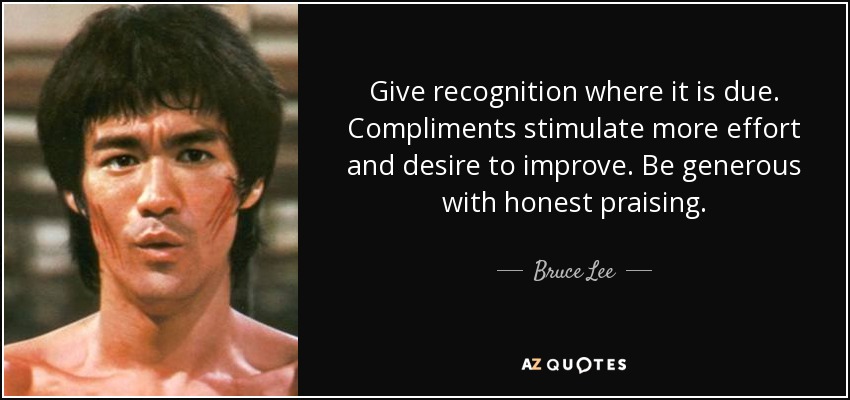
Give recognition where it is due
MY FAVOURITE QUOTE THIS WEEK
WHAT MADE ME GIGGLE THIS WEEK
This was live during a Swedish television broadcast... (thank you for sharing this with me Ashleigh! :) )
Tabitha Wambui is a renowned Kenyan referee and the only female FIFA accredited referee in Kenya. Tabitha is also currently a Guinness Made of Black ambassador. She is a single mother of two (her husband died tragically); Tabitha has risen to the ranks of international referee, while supporting female empowerment in Kenya and across the continent. Here is a great Q&A session with her; I love her three personal values of confidence, discipline and self trust.
#Kenya
An SUV built for African roads in Africa; an upstart company is building an SUV for the African market in Kenya (via HBS) #SouthAfrica
The 33 kilometre Blyde River Canyon in Mpumalanga is the third largest canyon and the largest forest or greenest canyon in the world! Here's more things to do in Mpumalanga via In Africa and Beyond.
#SouthAfrica I just absolutely love the work that Qhubeka does! Qhubeka moves people forward with bicycles. People earn bicycles through their programmes, improving access to schools, clinics and jobs. Qhubeka is an Nguni word that means “to progress”, “to move forward”. With a bicycle, a person can travel faster and further, and carry more. Apart from being totally AWESOME, I love their photos! [Carli-Ann Furno your photos rock!] Check these out:
Qhubeka Bicycle Distribution ~ Giyani
2018 Mandela Day Clean Up and Qhubeka Bicycle Distribution in Soweto
There are two distinct moments that I am particularly proud of this week:
Our Awesome AfriCAN computer training classes kicked off on Wednesday (17 October 2018) in Saldanha. The focus is slightly different to the Hout Bay pilot. In Saldanha, we are focussing on 15 small businesses (SMMEs); the business owners are all learning basic Word, Exel and email skills. We are also including two additional classes, business document design and business English. These are classes that we will definitely look at incorporating in the other areas as well. It is so important to help small businesses to speak the language of corporates. Part of the course will be on how to send invoices and what they should look like. To an extent small businesses can get away with sending a quote via WhatsApp, unfortunately, if they want to start doing business with larger organisations they will need to become fluent in the way that corporates do business. On completion, all the SMME that attend all the classes will receive their own website!
We will also be giving 15 community members the opportunity to attend basic computer literacy classes, they will also receive job readiness classes. The lady's beautiful smile in the photo above absolutely made my week!
The second proud moment was the original pilot class from Hout Bay graduating and each of the attendees receiving their certificates. Forty three people in total completed the course and can now use Word, Exel, PowerPoint and Outlook. I am so incredibly proud of Life Manuwe the facilitator and all the attendees.
MY BIGGEST LESSON THIS WEEK
In the 20190908 week that was, I mentioned that I had a massive rehaul of all my finances, medical aid, life insurance, short-term insurance you name it, thanks to Adviceworx. Thanks to their advice, I am now on Discovery Health. A BIG lesson I have learned in the last month is how driven by points I am! I'm on a mission to get to 'silver' status by mid-December. I am rather thankful that the Vitality program got me back into a running / exercise regime; my exercising took a bit of a knock earlier this year with very early (much earlier than my normal 04:30) mornings, which did impact my keenness to be active in any way. If anyone else is on Discovery and would like to join me on Vitality Active Rewards, my code = JOHANNL18f
MY FAVOURITE QUOTE THIS WEEK
“Art should comfort the disturbed and disturb the comfortable.” ~ Cesar A. Cruz
Here's an interview I did on SABC News earlier this week as well as an article we wrote on the subject.
On Ethics and
Activism: South Africa’s Nene Moment
Revelations by former Finance Minister Nhlanhla Nene on his meetings with the controversial Gupta family sparked outrage among South Africans and was met with calls for his axing. In his testimony to the Zondo Commission on State Capture, the former Minister was faced with the stark outcome of his ethical decisions. His resignation and replacement as finance minister by former South African Reserve Bank Governor, Tito Mboweni was unavoidable for a country grappling with rebuilding its reputation.
For managing director of Reputation Matters Regine le Roux, the question of ethics in leadership in any organisation boils down to the practice of instilling ethical behaviour into the DNA of an organisation. “The leadership of an organisation (or country) sets the example of how things need to be done. When measuring corporate reputations among South Africa’s private and public organisations, we look at ten core building blocks; corporate management is one of the first elements interrogated when it comes to assessing an organisation’s reputation.
“To rebuild the reputation of our country we need to laude President Ramaphosa for taking quick action in this matter; continuing to fight against corruption needs to remain top of his priority list as he indicated during his state of the nation address, walking his talk on this issue is crucial,” adds le Roux
The other key element that played a crucial part in this saga is strategic alliances; your reputation is impacted by the company you keep. Even though there is no evidence of any wrongdoing from the meetings conducted at the compound between Nene and the Guptas, but purely by association and lessons that we have learnt from other similar meetings, the worst case scenario is automatically assumed.
Why are reputations so important to treasure? “As a leader your organisation and in this case, country’s positive reputation has a direct impact on the bottom line and a country’s foreign investment opportunities.
"Taking a look purely at a corporate level, if your business has a positive reputation, people will want to work for you and buy your service or product. You will attract top talent, which in turn will impact the level of service or products that people will be willing to pay a premium for, so that they can be associated with your brand," explains le Roux.
At Ethics Monitor, Managing Director Cynthia Schoeman believes we all have a built-in radar of right and wrong and has coined the term “Ethics Activism” when referring to the role organisations should play in managing ethics within a company.
Schoeman adds, “Ethics are non-negotiable. It warrants that ethics is included as an important goal that is actively managed, supported and recognised. Expecting on-going ethical conduct without such meaningful engagement with employees is frankly wishful thinking. Given the range of challenges and improper personal agendas that can arise, regular engagement is necessary to ensure employees’ understanding and to maintain their commitment to ethical practices.”
le Roux maintains that an organisation needs to be ruthless about looking after their reputation especially because of the impact it has on the health and bottom line of an organisation (or country). “Simply put, leaders set the example and values need to be non-negotiable”.
Reputation Matters is hosting a reputation management master class in Cape Town from 12 to 16 November 2018. Join our well-established industry experts as we discuss some of the most important reputation building blocks any organisation should have in place. For more information visit https://bit.ly/2O13fbB
Recently I listened to a Freakonomics podcast where they interviewed former professional cyclist Lance Armstrong. In 2012, Armstrong was identified by the United States Anti-Doping Agency as the ringleader of a doping programme, was subsequently stripped of his achievements including seven Tour de France titles, and given a lifetime ban. The podcast hosts asked the question, ‘Has Lance Armstrong finally come clean?’ In the interview the fallen-from-glory cyclist mentions that he has spent in excess of U$111 million repairing his image.
This got me thinking about the cost associated with restoring a ruined reputation. For Armstrong, it’s actually not just his image that has been ruined; all of his former sponsors, purely by their association with him, have taken a hard knock. Consider what the news of his doping did for the reputation of his Livestrong charity that (rather ironically) encourages a healthy lifestyle?
Let’s take a local example, McKinsey, recently had to pay back almost a billion Rands in fees, Bain & Co has also offered to pay back their consulting fees of R164 million plus vat and interest; both these cases as a result of dubious business dealings. This does not include the amount that they will now need to invest in to get their reputation back on track so that people and businesses will want to do business with them again.
Working reactively is what firefighters do when they put out fires. They rush to the scene with all the tools they can use to pour water on the fire and stop it from spreading further. But depending on the type of fire, different methods might be needed to extinguish the fire; foam, chemicals or water. Knowing how your business works will help you to know how best to manage a crisis situation.
Unfortunately, the damage is already done and the cost of putting out the fire and repairing the damage quickly adds up.
Investing in your reputation need not be costly if done proactively. Conducting regular research will help you to identify any pressure points or areas within your organisation that are impacting on your overall reputation and the way that people perceive your organisation. Although you may think that research is costly and more of a nice-to-have extra, it is certainly not as expensive as what you will have to spend to fix your reputation if you work reactively. When looking at the bigger picture of associated costs, reputation research is an investment that does not compare with what you would need to fork out to fix a broken reputation.
According to the 2017 Aon Global Risk Management[1] survey, reputational damage is cited as the number one business risk. Unfortunately, the study also highlights that risk-preparedness is at its lowest level since 2007. Despite the availability of more data and analytics, and more mitigation solutions, surveyed companies are less prepared for risk.
It therefore does not help investing in research and not doing anything with the results and recommendations.
When you conduct reputation research and work proactively to manage red flags, you’ll be able to contain potential crisis situations, and plan considerably better to be ready in the event an issue does escalate into a full-blown crises situation. You will learn a lot from your stakeholders from the research, their perceptions and inputs will help you to highlight potential blind spots.
It is quite interesting that the 2018 Deloitte’s[2] Global Risk Management Survey focusses on the increase in Chief Risk Officers (CRO); this could quite easily also stand for Chief Reputation Officer.
When you have tarnished your reputation it is very difficult to restore it to the former glory it once had. Lance Armstrong is a case in point. The message is loud and clear, spend a small amount now on researching what is building or breaking down your reputation and reap the rewards in the long term. Or ignore your reputation at your peril and be prepared to pay millions in reactive work to restore stakeholder perceptions.